

Alongside the old slave fort in Keta, about three hours drive along the Ghanaian coast from the capital Accra, stands a dilapidated wooden grandstand. This is London Park, the home of FC Keta until they were disbanded a decade ago. The reason is not hard to ascertain.
In front of the grandstand, where the pitch used to be, is a ramp leading to an asphalt road. Beyond that, is the sea. Coastal erosion is a big problem in Ghana but few places have suffered as much as Keta. Once it was a thriving port but over the past 60 years, the sea has eaten away about a quarter of a mile of coastline, roughly half the area the town once occupied, including the football ground.
Yet unlikely as it seems, out of the ruins of London Park has sprung a new club that, thanks to modern technology, offers a model of ownership that may be the future for many smaller clubs throughout the world.
Although a programme of shore defence, begun in 1999 and completed in 2006, has safeguarded the town, the new club, Keta Sandlanders, offers some much needed optimism. The port is gone and Keta is stagnating. According to Paul Jones, a London-based lawyer who lived in the town for four months after graduating in 2004, there is little to do there, which is one of the reasons he became involved in running the new football club.
They were established in November 2002 by Frank Selasie Cole, who remains chairman. After a string of impressive results in early friendly matches – including a narrow defeat to the big Accra club, Hearts of Oak – Sandlanders were excused from having to play in the Ghanaian third division and took a place in one of the parallel second divisions. There they remain, having missed out on promotion in 2003 in a penalty shoot-out.
The club took time to recover from that disappointment but, slowly, things are beginning to stir again, largely thanks to an initiative in which Jones is heavily involved. They are attempting to build a base of members from across the globe, who can follow the team’s progress via their website. Membership costs just £5 a year, of which £4 goes to the club, 50p to the Afrikids charity and 50p to community projects within the town.
The model, Jones says, is Barcelona – “run by the fans for the fans and the community, something that is more than a club” – but his project is part of a wider trend of fans taking control of their clubs.
As top-level football becomes more commercialised and takeovers by foreign owners, usually with no connection to the city in which the club is based, become common, there seems to be an increasing desire among fans to seize back control, to become involved in an institution that has, as most clubs did when they were first founded, a role in the local community.
The most vaunted example of internet membership is Ebbsfleet United, a team from the Conference (the highest division of non-league football in England), who were taken over by myfootballclub.co.uk. That organisation, run by the former journalist Will Brooks, charges members £35 for the right to vote on everything connected with the club, including transfers and team selection. More than 50,000 have signed up and, despite understandable suspicion on the part of Ebbsfleet fans, the project appears to be running smoothly.
The first club to be run by its internet members, though, was established in Israel after the 2006 World Cup by 26-year-old Moshe Hogeg. “Argentina fans wanted Lionel Messi to play against Germany and the coach José Pekerman thought otherwise,” he explained. “Millions of fans around the world wanted to see Messi in the starting 11 but one man thought otherwise and destroyed all our dreams. Like a lot of people, I got angry and decided to do something about it.
“Most of our [web] surfers like the idea that they can decide what the team will do, what formation they will play and who will be the substitutes.”
Last year Hogeg, and his backers from backgammon website Play65, spent £250,000 on Hapoel Kiryat Shalom, a side based in Tel Aviv who play in the amateur sixth tier of Israeli football. He decided against charging a membership fee and has attracted more than 7,000 members through the web2sport.com website.
Fewer than 1,000 fans turned up to watch Hapoel Kiryat Shalom’s opening game of the season against Maccabi Ironi Or Yehuda but more than 10,000 followed the game live online. Tactical changes were suggested and discussed using a chat-room facility, with members then voting on them and the results being relayed to the coach Yaakov Yakhri on the touchline via his laptop.
“It has been hard for me to accede to the wishes of the surfers,” Yakhri said. “But I am always willing to try new things.”
It is hard to imagine Seth Hoffman, the feisty coach of the Sandlanders, being so sanguine but then voting on tactical decisions is not part of Jones’s plan, although he is intrigued by the possibilities of live streaming of matches. His plan is motivated less by a desire to give fans the chance to prove themselves capable of running a club, than by wanting to support the community in Keta.
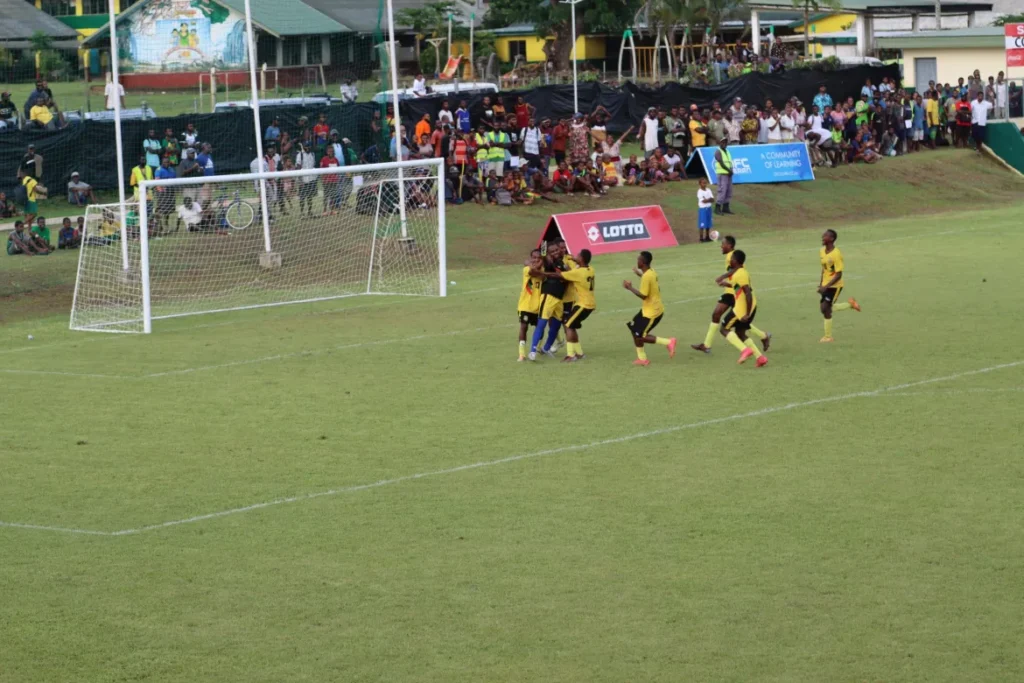
And the community is certainly behind the club. The new season begins next month but last month about 2,000 fans watched a pre-season friendly against the Junior Stars of Aflao. The surface was awful but the game was lively and the excitement palpable.
This might be the start not merely of something big for Keta but for community football as a whole.