

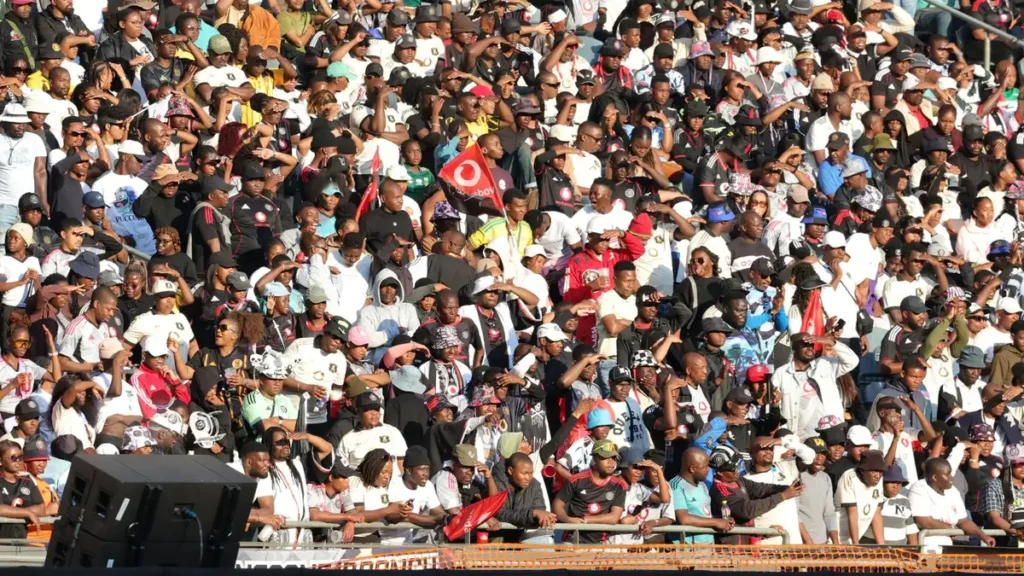
How clubs let their supporters make decisions online from team lineups, substitutions, and player transfers to ticket prices and the management of club finances.
By Leonardo Bachanian | Clarín.com
Ever since football became a sport—and even more so since it became a business—people have claimed that certain players influence a manager’s decisions, or that club executives or sponsors dictate which players should be on the team. How many managers have made a substitution in response to the chants, demands, or insults of fans in the stands, hoping to change the course of a match? Hundreds.
But what if those same fans could actually make the decisions themselves? Imagine thousands of supporters voting online on the starting lineup, tactics, substitutions, player signings and sales, ticket prices, shirt designs, and, most importantly, how the club’s money should be managed. That is exactly what has been happening at clubs such as Ebbsfleet United in England, Hapoel Kiryat Shalom in Israel, and Keta Sandlanders in Ghana.
The British project MyFootballClub.com, created by journalist Will Brooks, was the first to introduce this new vision of football, establishing a new model for the digital age: the supporter-manager, someone who gets to make the decisions. It is like a football management video game, except that it happens in real life.
Brooks came up with the idea of recruiting people from around the world who were willing to pay an annual membership fee of £35 (approximately $70 at the time). The money raised would then be used to purchase whichever club the online community selected. With £700,000 in contributions, the internet supporters acquired a 51 percent stake in Ebbsfleet United, which competed in the Blue Square Premier League.
“The idea of a club managed by its fans has always been in the mind of every supporter. It was just a matter of finding a way to make it happen,” Brooks explained.
The first major success came quickly. The previous month, Ebbsfleet United had won the FA Trophy at Wembley Stadium.
“The club is funded by the money contributed by internet users, and that money pays my salary as well as the players’ wages. So there is a good reason to let them decide which players they want to see on the team,” said Brooks, a former Republic of Ireland international who managed the project.
As for Ebbsfleet’s traditional supporters, one of the club’s former directors said they had quickly understood the MyFootballClub concept and were happy with it.
Giving Fans a Voice
When Lionel Messi was left on the bench against Germany during the previous World Cup, José Pekerman’s decision angered not only Argentine fans.
“I was really upset when Messi didn’t come on. Thousands of people around the world wanted to see him play, but only one person thought otherwise. I realized that this shouldn’t happen because we are the fans who pay for tickets, buy shirts, watch the commercials, and support the business. So my friends and I decided that we needed to be part of a club where the fans had the power,” Israeli entrepreneur Moshe Hogeg told Clarín.com.
Hogeg, the owner of Web2Sport, invested $500,000 alongside sponsors of the online backgammon platform Play65 to acquire Kiryat Shalom, a club in Israel’s third-tier semi-professional league.
One thousand spectators attended the club’s first match of the season, while another 10,000 followed the game live online. During the match, the club’s 7,000 members could vote on substitutions and post comments on the match blog.
“I think this offers a solution not only for small clubs but also for major teams. In the future, even at a World Cup, there could be a system that combines the decisions of coaches and fans,” Hogeg predicted.
He believes the model works because supporters already see themselves as football managers and want to be involved in the decision-making process.
“When the team wins or scores a goal, they feel that the achievement belongs to them. This is not the typical club they watch on television or from the stands. They can influence the tactics and practically everything else,” he explained.
Hogeg does not consider collective decision-making an obstacle. Although thousands of people may participate, he says, discussions take place in online forums where everyone can express an opinion before a decision is reached.
The coach still plays an important role. He explains his preferred tactics and starting lineup on the club’s blog. The key, however, is for him to understand that his role is to select the team, while the fans take on the role of coaches.
And how do the players feel about this unusual arrangement?
“They are excited. When they walk down the street, young people ask to take pictures with them, and our top scorer has already received offers from first-division clubs,” Hogeg said.
He hopes to bring the concept to Spain and Argentina. He is also convinced that clubs operating under this model will become successful over the next decade. Perhaps, he suggests, “the next Messi will play for a team like Kiryat Shalom.”
Football as a Tool for Community Development
Paul Jones, an English lawyer, shares a similar vision. After graduating from the University of Oxford in 2004, he spent four months in Keta, a coastal town in Ghana. Today, he serves as vice president of Keta Sandlanders, a club competing in the country’s second division.
“This is a model that creates interest in small clubs and helps promote them. Everyone knows Michael Essien, but few people know the club where he began his career,” Jones told Clarín.com.
At Keta Sandlanders, the annual membership fee is just £5. Of that amount, £4 goes directly to the club, 50 pence goes to the Afrikids organization, and the remaining 50 pence supports projects aimed at developing the local community.
Until about 60 years ago, before coastal erosion destroyed the port that had sustained its economy, Keta was Ghana’s second-most important city.
“Our plan is to combine the development of an area with the participation of fans who can feel that they are part of a club’s growth,” Jones explained.
Members of Sandlanders can participate in discussions about the club’s future, including reviewing sponsorship contract terms, suggesting how the organization should develop, and deciding which community projects deserve support.
“Members will always be able to ask questions of the players and coaching staff through the website,” Jones added.
What about substitutions? Who makes those decisions?
“The coach does,” he replied without hesitation.
Could the same model work in Argentina?
“Without a doubt,” Jones said.
We will have to wait and see. For now, however, there are 40 million potential football managers ready to get involved.